
You could be days from a better paycheck—and a surprise mouth swab could stop it cold. If you’re staring at a short-notice oral fluid test, you’re not alone.
Many hardworking people run into the same wall: legal, off-duty use (often cannabis) clashing with zero-tolerance policies. You want facts that help you protect your opportunity without making risky moves.
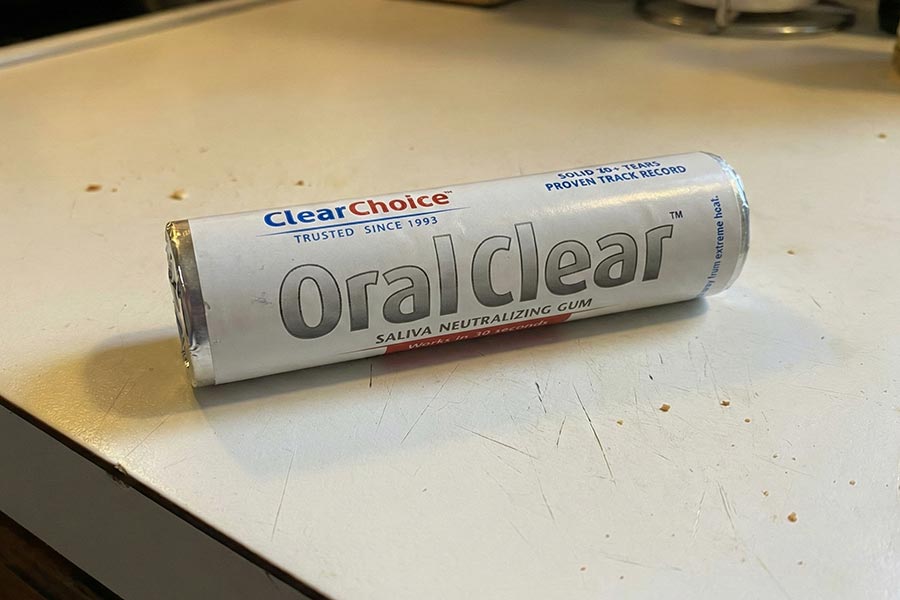
You’ll find that here. We unpack what Oral Clear chewing gum is, what sellers claim, what labs actually do, and safer ways to think through your next steps. The big question: is an expensive, single-use gum a smart bet—or a costly gamble?
A note on scope, ethics, and your responsibilities
We review claims around Clear Choice Oral Clear chewing gum—also called oral clear saliva neutralizing gum—using public product descriptions and typical testing guidelines. We don’t teach anyone how to defeat a drug test. Attempting to tamper with a test can lead to serious employment, ethical, and sometimes legal consequences. Our goal is simple: translate marketing promises into plain language, flag what’s unproven, and highlight job-safe choices that match workplace policy.
Where useful, we reference how oral fluid testing is commonly structured in the United States, including lab confirmation methods used in many programs and employer policies modeled on SAMHSA/DOT frameworks. This oral clear gum review focuses on safety, reliability limits, detection risks, and better practices for people chasing stable, family-supporting work.
This information is for educational purposes only and does not replace professional consultation with HR, legal counsel, or a healthcare provider.
- Acts in 30 seconds
- Most effective to pass a drug test
- Lasts for 30 minutes
- Legal
What a mouth swab actually looks for in your saliva
Oral fluid testing checks your saliva for parent drugs and some metabolites that show very recent exposure. Think hours, not weeks. A collector places a small swab between your cheek and gum (about one to three minutes) to gather fluid. Labs typically start with an immunoassay screen and can confirm positives with more precise tools like liquid chromatography–mass spectrometry (LC/MS or LC-MS/MS). Those instruments are very good at telling the difference between minty freshness and the actual presence of a drug.
Common targets include THC from cannabis, nicotine metabolites like cotinine, cocaine, opiates/opioids, and certain prescription drugs. The window varies. For example, oral THC is often detectable for several hours after use; heavy daily consumers may see longer risk windows because residue clings to oral surfaces. Your mouth’s health matters too. Plaque, inflamed gums, and low saliva flow can nudge measured levels up or down.
Employers know people try to game swabs. So many programs use observation and pre-collection rules—no food or drink for a short period before collection—to cut down on tampering.
The product at a glance and how it is positioned by sellers
Sellers describe Oral Clear chewing gum (often labeled Clear Choice Oral Clear gum or clear choice oral clear saliva neutralizing gum) as a single-use, capsule-in-gum product meant for last-minute oral swab tests. The headline promises are bold: it “activates” in about 30 seconds and creates a roughly 30-minute “clear zone.” It’s marketed as portable, discreet, and usable without an abstinence period. The price commonly sits near $95 per piece, which makes it a premium purchase compared to other fast-acting mouth products.
What the capsule-in-gum concept claims to do in the mouth
The design is simple: a gum with a small, liquid-filled capsule inside. When you bite it, that liquid spreads across your mouth. Marketing suggests the solution interacts with saliva and cheek cells to reduce detectable drug traces for a short window, typically described as up to 30 minutes. Some sellers propose pairing it with a separate detox mouthwash for “broader coverage,” which can raise cost and complexity. Notably, we have not seen peer-reviewed clinical trials that verify specific success rates, cross-substance reliability, or lab-proofed mechanisms for this product. Claims exist; independent evidence does not.
Ingredients that are publicly mentioned and their typical roles
Public lists vary by reseller, but the common items fall into a few buckets:
Base and carriers: gum base, glycerol, soy lecithin. These shape the chew and help disperse flavors. Sweeteners and flavor: acesulfame, aspartame, dextrose, corn syrup, sugar, and natural/artificial flavors. These make the gum palatable. People with phenylketonuria should watch for aspartame. Preservatives/antioxidants: BHT (butylated hydroxytoluene) appears in some descriptions. While marketing sometimes links BHT to “neutralization,” such claims are not validated for drug testing. Peroxide references: some reseller pages mention a hydrogen peroxide derivative (perhydrol). Peroxide can change the oral environment, but we have no published potency, safety, or interaction data for this product in peer-reviewed sources.
The “active” elements are proprietary and not fully disclosed. That lack of transparency limits any trustworthy safety or efficacy evaluation across different users and substances.
Claims versus what we can verify from independent signals
We’ve seen sellers quote success rates up to 99.9% for Oral Clear gum. But they don’t publish methods, sample sizes, what substances were involved, or whether confirmation testing was used. That’s a red flag for anyone making a career-impacting decision. Public user reviews are mixed, which is what we’d expect for a high-variability situation. Some people report negative results when they time things just right, while others—especially with heavy or very recent use—report non-negative outcomes.
Modern lab workflows are built to reduce false negatives. That means superficial changes to saliva often don’t hold up across substances and test types. Good oral hygiene makes your mouth healthier, but a clean feel isn’t the same as a clean analytical result. Bottom line: a few users will always report a pass, just as others report failures. That doesn’t add up to a reliable, repeatable method across workplaces.
How THC, nicotine, and common prescriptions behave in saliva—and why that matters
THC is sticky—literally. It’s lipophilic, so it clings to oral surfaces. A hit or edible shortly before a test can spike levels rapidly. A daily user may carry more persistent residue than someone who uses once on the weekend. Nicotine and cotinine reflect very recent use; some employers test for nicotine in wellness programs, others don’t. Cocaine and certain opioids can be robustly detected in the first hours after use. Prescription medications vary widely, and panels differ. Never alter or stop a medication without a clinician’s advice.
When a product promises a fixed “30-minute window,” it ignores how differently each drug behaves, how each person’s mouth differs, and how strictly a collection is run. That’s why guarantees don’t hold up in real-world testing.
Visibility to trained collectors and lab analytics
Collections can be observed. If a person fidgets, produces unusual odors, spills liquid, or shows foreign material in the mouth, collectors may document it. Many programs require a waiting period without food or drink to prevent interference. Labs also look for signs of adulteration or interfering substances. If a collector suspects tampering, some employers treat that as a refusal or policy violation—even without a positive result. Facing a tampering allegation can be worse than a straightforward non-negative test.
Your mouth health and safety checklist before considering any product
Think health first. People with phenylketonuria need to avoid or limit aspartame. Hydrogen peroxide derivatives can irritate gums and cheeks, especially if you have gingivitis, periodontal disease, mouth ulcers, or recent dental work. Flavorings and preservatives like BHT can trigger sensitivities. If irritation occurs, stop and consider medical attention. Individuals with cardiovascular disease, multiple medications, or complex health conditions should ask a clinician before using non-prescribed chemical agents in the mouth.
No FDA clearance exists for using Oral Clear chewing gum (or similar products) to alter drug test outcomes. Treat all such products as unproven for that purpose.
Two realistic situations and what actually mattered most
We host workforce conversations with local job seekers. Two stories stuck with us.
First, a pre-employment swab with short notice. The participant focused on hydration, solid sleep, and—importantly—called HR to confirm timing and logistics. The result ended up hinging on recency of use and policy timing, not on any single product. The takeaway: clear communication and understanding the test window mattered more than a last-minute purchase.
Second, a random on-site swab in a warehouse. Anxiety ran hot. The supervisor enforced a strict no-food/no-drink period before the swab. The individual realized that prescription documentation and honest communication with HR were far more valuable than improvised tricks. Observation and tight timing left little room for attempts to “neutralize” anything.
We see this pattern again and again: trained collectors and tight procedures reduce the impact of quick fixes.
- Acts in 30 seconds
- Most effective to pass a drug test
- Lasts for 30 minutes
- Legal
What it costs, where legitimate stock is sold, and counterfeit red flags
Typical price: about $95 per single-use capsule, with some listings between $90 and $124. Shipping adds cost and introduces timing risk. Sellers often claim Clear Choice Oral Clear gum is officially distributed through specific channels (frequently citing long-standing resellers). Authentic stock is usually limited to the maker’s website or named distributors. Counterfeits are a real issue in this niche. Red flags include deep discounts, sellers with unclear identities, inconsistent packaging, and altered expiration labels.
Storage matters. Heat and time can degrade contents. If you choose to buy, verify return policies and customer service contacts. A missing phone number or evasive support is a bad sign.
How this product compares with other fast mouth products and non-tampering options
Some quick-acting mouth products (for example, detox mouthwashes) claim similar outcomes and sometimes cost less, though they have their own instructions and risks. Everyday mouthwashes improve hygiene and breath but are not validated for changing drug test results. The only reliable, policy-aligned approach is time-based natural clearance.
If you’re researching saliva tests and timing, our guide to a mouth swab drug test for weed explains detection basics so you can plan within policy. For broader health-focused strategies, you might also read about how to get weed out of your system over time. These resources emphasize understanding your risk window rather than relying on last-minute tricks.
Questions to answer before spending money on a single-use gum
Ask yourself: Am I in a regulated program (DOT, probation, safety-sensitive) where suspected tampering is treated as refusal? How recent was my exposure, and do I understand detection windows for that substance? Will collection be observed and controlled, reducing the feasibility of last-minute changes? Can I clarify timing or prescription issues with HR instead of gambling on a product? Do I accept that the answer to “does oral clear gum work” is uncertain—and that consequences for suspected tampering can be severe?
Quick do and don’t reminders to reduce risk and protect your health
Do read company policy and follow collector instructions exactly. Do keep up basic oral health—brushing and flossing help your overall well-being. Do coordinate with HR or your clinician about legitimate prescriptions and bring documentation if allowed. Do assume short-notice, observed collections are built to defeat last-minute interference. Do verify authenticity and ingredients if you still consider a product, and talk to a clinician if you have medical concerns.
Don’t rely on online guarantees or anonymous oral clear gum reviews for a career-critical choice. Don’t use expired or heat-damaged products. Don’t expect any single item to overcome heavy or very recent exposure across lab methods. Don’t ignore that suspected tampering can carry harsher consequences than a non-negative result. Don’t confuse marketing words like “neutralizing” with peer-reviewed, lab-validated evidence.
Misconceptions and pitfalls that trip people up
Myth: “Neutralizing” claims guarantee a pass. Reality: no product can guarantee outcomes across labs, drugs, and protocols. Myth: Minty taste means clean saliva. Reality: taste is not an analytical measure. Pitfall: assuming a uniform 30-minute window applies to all drugs and every mouth. Pitfall: forgetting observation and pre-collection rules exist to stop last-minute changes. Pitfall: overlooking sensitivities or allergies to sweeteners, flavors, or peroxide derivatives in a proprietary blend.
What we heard from local workforce conversations—and how we translate that into support
We speak with job seekers who want better pay and stability for their families. Short-notice swabs create real anxiety. Many people underestimate how fast a swab can be deployed and how controlled the setting is. In our community workshops, we stress policy clarity: ask questions early, understand your employer’s rules, and focus on choices that won’t jeopardize your offer. When folks ask for an oral clear gum review, we walk through cost, uncertainty, and the risk that quick fixes build false confidence. Long-term strategies—policy literacy, preparedness, and open communication—consistently serve people better than last-minute products.
Our bottom-line view in plain terms
Oral Clear chewing gum is marketed as fast, discreet, and powerful. The reality: reliability is unproven across substances and lab conditions, and outcomes are mixed. Some users report success; others do not. Getting flagged for suspected tampering can be as damaging—or worse—than a non-negative result. If you’re in a regulated or zero-tolerance environment, compliance and communication are safer than shortcuts. If you still consider buying, treat it as a gamble, not a plan. Prioritize your health, confirm authenticity, and keep your decisions aligned with policy.
Questions people ask most, answered briefly
Does oral clear saliva neutralizing gum really work?
Sellers claim fast activation and high success. Independent, peer-reviewed evidence is not available, and user reviews are mixed. Some people report negative screens; others do not—especially with very recent or heavy use. There’s no guarantee.
How long does the saliva neutralizing solution last?
Marketing mentions a window of about 30 minutes. In reality, detection can vary by substance, your oral health, and how strictly the collection is run. Observation and pre-collection rules can shorten or nullify any effect.
Is there an abstinence period required before using the gum?
Sellers often say no abstinence is required. Policy-aligned options—such as allowing enough time for natural clearance—are more reliable and safer from a job perspective.
How should I use the gum to ensure effectiveness?
We don’t give operational steps for tampering. If you research it anyway, read the manufacturer’s label. Be aware that trying to alter a test can lead to employment consequences.
Can I eat or drink after using the gum?
Sellers commonly suggest avoiding food or drink for a short time after use. Keep in mind: violating test-site rules about eating or drinking before collection can be flagged, and suspected tampering can be treated as a refusal.
How often can I use this product?
Some reseller materials warn against frequent use (for example, no more than twice per month). If you have health conditions or take medications, consult a clinician before using non-prescribed chemical agents in your mouth.
Where to buy Oral Clear Gum and what it costs
Expect roughly $95 per single-use piece. Authentic stock is usually limited to the maker’s site or designated resellers. Watch for counterfeits and vague sellers. Consider non-tampering alternatives like policy clarity, timing, and natural clearance, which protect your career without risky shortcuts.
What substances might Oral Clear Gum claim to affect?
Marketing and some oral clear gum reviews mention THC, nicotine, cocaine, opiates/opioids, and more. Confirmation testing and detection windows vary, which limits consistent reliability across substances.
Oral Clear Gum ingredients
Public lists include gum base, glycerol, soy lecithin, sweeteners (such as aspartame and acesulfame), flavors, BHT, and sometimes a peroxide reference. The proprietary “active” components aren’t disclosed in detail. That lack of transparency makes independent safety and efficacy assessment difficult.
Key terms you may see in marketing and testing
Neutralizing: a marketing term, not an FDA-recognized claim for drug testing. Window or clear zone: the supposed time period when a product reduces detectability; not predictable across substances. Parent compound vs. metabolite: parent is the unchanged drug; metabolites are breakdown products. Cutoff: the level above which a result is reported non-negative; cutoffs vary by program. Adulteration: adding substances to interfere with testing; can trigger invalidation or policy action.
Sourcing notes, shipping realities, and storage considerations
Authenticity is a challenge in this niche. Stick to official sites or named resellers. Shipping hubs and timelines differ; allow for delays if you order anything sensitive. Store at room temperature, away from heat. Check expiration dates, and avoid items near or past their date. Because Oral Clear gum is single-use, repeated attempts get expensive fast. That cost, paired with uncertainty, is a tough combination when your job opportunity is on the line.
A quick comparison for context
| Item | What it is | Pros | Limitations |
|---|---|---|---|
| Oral Clear chewing gum | Single-use, capsule-in-gum marketed as fast “neutralizer” | Portable; marketed as 30-second activation | High cost; unproven reliability across substances; risk of suspected tampering |
| Detox mouthwashes | Quick-use rinses sold for oral tests | Often cheaper than gum | Also unproven across labs; instructions can clash with site rules |
| Everyday mouthwash | Hygiene and breath freshener | Good oral health support | Not validated to change drug test results |
| Policy-aligned planning | Timing, documentation, HR communication | Safest path for your career | Requires planning; not a last-minute fix |
Realistic detection windows by substance
Broad ranges are shown below. Actual results differ by use pattern, oral health, cutoffs, and lab methods.
| Substance | Typical oral fluid window | Notes |
|---|---|---|
| THC | Several hours; longer with heavy daily use | Residue clings to oral surfaces; recent use spikes risk |
| Nicotine/Cotinine | Hours | Policies vary; often used in wellness programs |
| Cocaine | Hours to about a day | Strong early detection; confirmation reduces false negatives |
| Opiates/Opioids | Hours to a day | Depends on specific drug and dose |
| Prescription stimulants/sedatives | Varies widely | Never alter prescriptions without clinician guidance |
Final perspective for our community
We want you to land that job with a clean, confident path. Oral Clear gum and similar products make big promises with thin proof. A few people will swear by them; others will share costly failures. What consistently works well is policy literacy, honest communication about legitimate prescriptions, and time-based natural clearance. That approach builds trust with employers and protects your record. If you still research products like oral clear gum for a drug test, do it with eyes open: check authenticity, consider health risks, and remember that suspected tampering can derail a great opportunity.
- Acts in 30 seconds
- Most effective to pass a drug test
- Lasts for 30 minutes
- Legal